
Cheuk Nang (Holdings) Limited · 131.HK
About the Group
A Chinese Hong Kong property developer, building for the long term in Hong Kong, Hangzhou, Shenzhen, Macau and Kuala Lumpur since 1988.
The Group today
What we do
Cheuk Nang develops residential property, keeps most of it, and manages what it keeps. Owning a building for decades sharpens the question of how it was put together in the first place, and answers it in favour of durability over speed.
Current developments are in Hong Kong, Shenzhen, Hangzhou, Macau and Kuala Lumpur. The shares are listed on the main board of The Stock Exchange of Hong Kong Limited under stock code 131.
- Developing property since
- 1988
- Listed
- HKEXstock code 131
- Offices
- Hong Kong · Kuala Lumpur
- Developments
- Nine current projects
Direction
How the Group is run
Day-to-day direction rests with the Board and its committees. Dr Gi Chao is Vice Chairman (also known as Deputy Chairman); the executive directors run the operating businesses, and four independent non-executive directors chair or sit on the audit, nomination and remuneration committees.
Board of Directors
The current directors, their roles, and the composition of each Board committee. See the Board →
Corporate governance
How the Board directs and supervises the Company, and what it publishes to shareholders. Governance →
Results and filings
Annual and interim reports, results announcements and the HKEXnews archive. Reports →
Origins
How it began
Cheuk Nang (Holdings) Limited began as Far East Wool & Fibre Mill, Limited, a wool manufacturer listed on the exchange in 1963. The property business starts in 1988.
Its founder, Cecil Chao Sze-Tsung, was born in Shanghai in 1936 to Chao Tsong-yea and Nyi Ya-tsung, who built the Wah Kwong shipping business. The family moved to Hong Kong during the war. He read architecture at Durham University in England, returning as a registered architect and a member of the Royal Institute of British Architects.
From 1958 to 1972 he worked in the Hong Kong Government Buildings Office. Those years gave him a working knowledge of statutory planning and land use that he took into private practice: in 1972 he founded Cecil Chao & Associates, an architectural firm that has since delivered more than three hundred projects and remains the in-house design practice for Cheuk Nang developments.
He had earlier founded Wah Kwong Properties, the family property business within the shipping group. In 1988 he acquired Far East and renamed it Cheuk Nang, backed by angel investors including the Hong Kong banker Dr Ho Tim. In the decades since, the Group has developed in Australia, Europe and across Asia — many of those projects long since completed and passed to their owners.
Commercial
Office buildings in Hong Kong
The Group is known for homes, and it has developed offices as well. Cheuk Nang Centre on Hillwood Road, in Kowloon, was the first, and the Group worked from it for years.
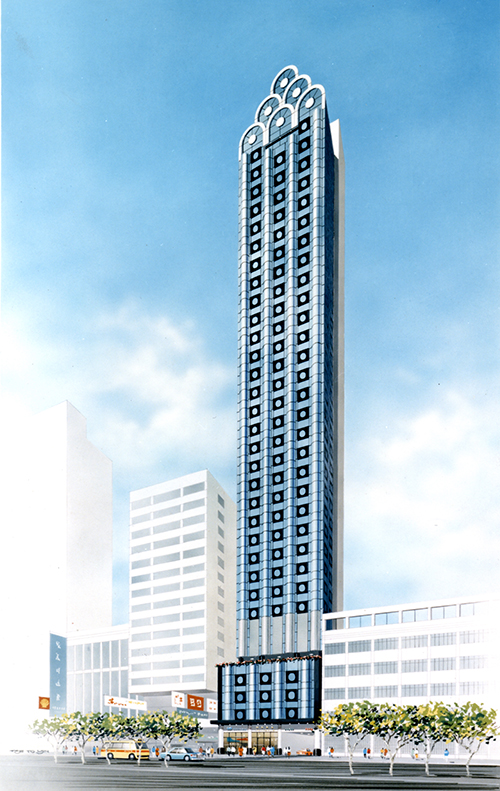
Cheuk Nang Plaza came next, across the harbour: thirty-one storeys at 250 Hennessy Road in Wan Chai, finished in June 1999, and the head office from the day it was done, until the tower was sold some years later. The Group is on the lookout for new commercial office opportunities where they arise.

The founder
Cecil Chao
Dr Chao remains Executive Chairman. Alongside the Group he has funded scholarships, medical research and heritage conservation in Hong Kong, elsewhere in China and across Southeast Asia since the 1980s. In 1993 he established a charitable foundation, and in 2016 he endowed the Dr Cecil Chao Architectural Prize at the University of Hong Kong. He was named a World Outstanding Chinese in 2004 and received the ASEAN Lifetime Achievement Award in 2016.
“Every project is a canvas for improving lives. If it cannot uplift, it is not worth building.”
The Cecil Chao FoundationValues
Built to last
Cheuk Nang has worked from a simple conviction since 1988: that lasting value is earned. The Group develops for the long term, holding to standards of integrity and craftsmanship its founder had set out in practice long before that.
What that means in practice is care, and attention paid to the details most people never notice and everybody feels. It means building to a place rather than over it: which way the rooms face, where the afternoon sun falls, how a block steps down a slope instead of flattening it, what the wind and the water do across a site through the year.
These are homes meant to be lived in properly — where children grow up, where a family gathers its memories, and where the place still works forty years on because somebody thought about it at the start.
See the developments Get in touch